
Introduction: My Journey as a Fertilizer Plant Operator
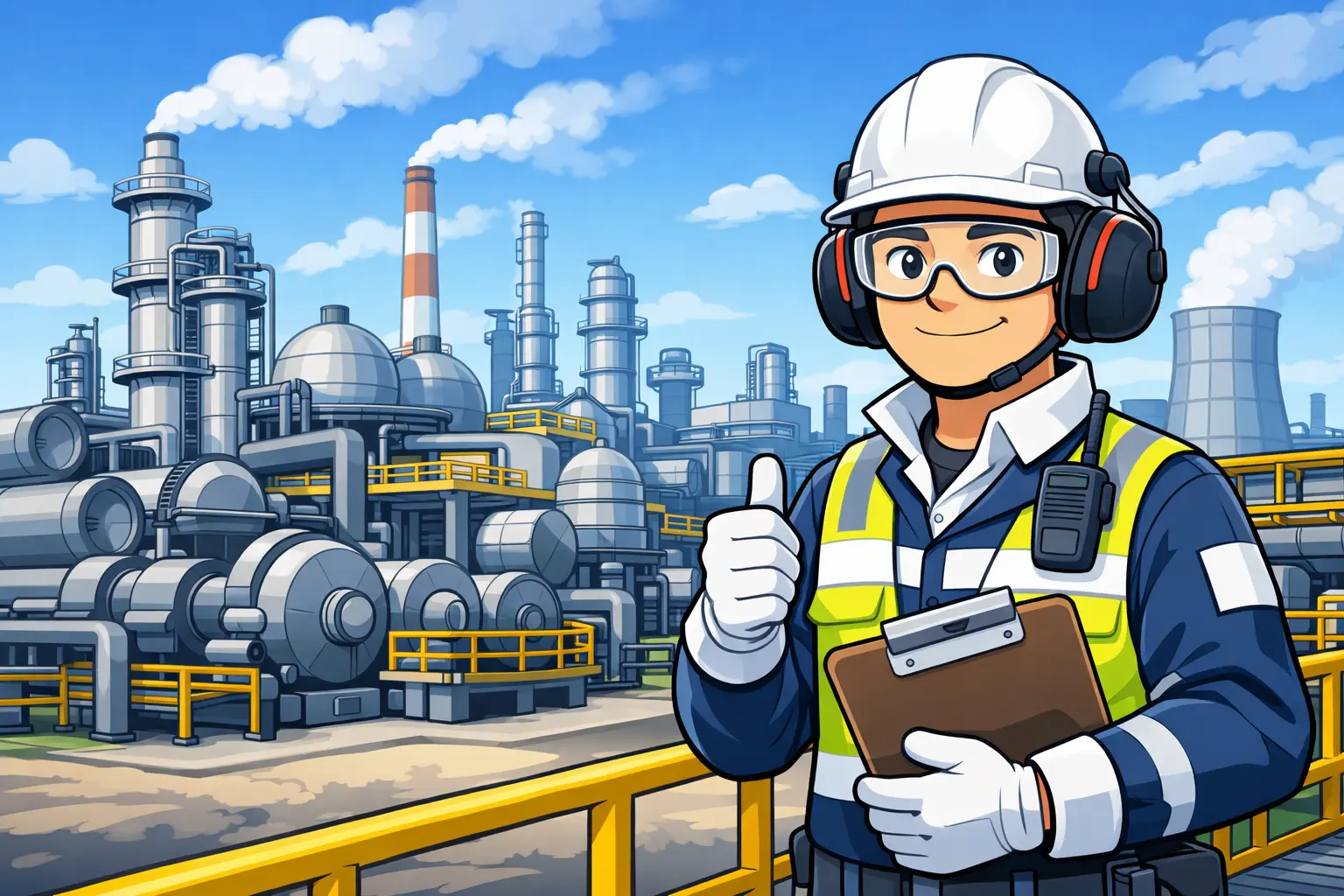
Hi, my name is Raza Muhammad, and I work as a plant operator in a fertilizer plant. I started my career in 2018, and since then I have continued to learn through daily plant operations.
The knowledge and experience I have gained over these years are what I will be sharing on this blog.
Who This Blog Is For
Before going further, it is important to clarify who this blog is for.
This blog is created specifically for those who want to become plant operators, trainees who are interested in learning compressor operations, and operators who are already working in industrial plants but do not have the opportunity to learn compression-station operations in their current roles.
This blog is written only for operators. It is not intended for engineers, designers, or advanced technical writers.
Everything shared here is based on practical, on-the-job learning, explained in clear and simple language, from an operator’s point of view.
Purpose of This First Post
This is the first post on my blog. In this post, I want to give you a clear idea of the fertilizer plant area where I work and the type of equipment installed there.
I will also explain what topics we will discuss in upcoming posts, so you know exactly what you can expect to learn from this blog.
In the sections ahead, I will introduce the compression station, the main compressors installed in the plant, and the supporting systems that an operator must understand.
Step by step, we will discuss how these machines are operated, monitored, and handled from an operator’s point of view, based on real plant experience.
Before moving ahead, one important thing needs to be clear. I work in the compression-station area of the plant.
This area includes compressors that support both front-end and back-end processes, depending on plant design and operation.
Some compressors support front-end processes, while others are part of back-end operations.
In this blog, I will explain both areas step by step, but my main focus will remain on the compression station where I work daily as an operator.
How Real Plant Learning Starts (Not Just Theory)
As I mentioned earlier, my journey as a compressor operator started on my very first day in the plant. When I joined, we were first sent for theoretical sessions.
The instructors explained what compressors are, how important they are for a fertilizer plant, and how many processes depend on them. However, I want to make one thing very clear here. I will not repeat textbook theory on this blog.
I will share only what I personally experienced and learned on the plant floor, so you can read without any confusion.
During those theory sessions, we were given a full overview, but honestly, only a small part made sense at that time.
Real understanding came later—when I saw the plant closely, heard the noise of running machines, stood near the equipment, and started line tracing in the field.
That was the moment when things began to connect, and I finally understood how the plant actually works.
My goal with this blog is exactly the same.
I want to teach you as much as I can, based on real operating experience. I will not limit you to theory only.
You will learn real plant practices, starting from basic but critical skills like line tracing, which is one of the most important responsibilities of a plant operator.
Once you understand line tracing, many plant operations start to make sense automatically.
Supporting Systems Every Compressor Operator Must Understand
Operating a compressor is not only about the main machine. As plant operators, we must also understand the supporting systems that keep compressors running safely.
In upcoming posts, we will cover key systems such as the lube oil circuit, condensate handling, instrument air, and steam or utility systems where applicable.
These systems play a critical role in daily operation and troubleshooting.
Step by step, we will also learn how compressors are started up, how they are shut down, and what kind of problems can occur during start-up and shutdown.
In addition to this, I will explain what an operator’s daily routine looks like when the plant is running normally, and how we work, monitor, and respond as plant operators.
From my first day in the plant until today, whatever I have learned, I will share here—one topic at a time, one post at a time, Insha Allah.
So feel free to follow along without hesitation. Everything shared on this blog is based on real plant experience, written especially for operators.
Important Note on Safety and Confidentiality
To keep things clear and professional, this blog will not include plant names, confidential operating values, or proprietary procedures.
Everything shared here is based on general operating experience and learning.
Always follow your local plant procedures, safety rules, and instructions while working in any industrial environment.
Compressors Installed in Our Compression Station
In our plant area, there are four main compressors, and each one handles a different process. Understanding their purpose is the first step to understanding how a fertilizer plant operates.
I will give you a short overview here. Detailed operation, line tracing, and auxiliary systems will be discussed one by one in separate posts later.
The compressors installed in our area are:
- Air Compressor
- Synthesis Compressor (Synthesis Machine)
- Ammonia Compressor
- Natural Gas Booster Compressor (Reciprocating Compressor)
Below is a brief explanation of why each compressor is used in a fertilizer plant.
Air Compressor – Overview
The air compressor plays an important role in the front-end process of the plant. Atmospheric air is taken in and sent to the secondary reformer, where nitrogen is required for ammonia production.
Without nitrogen, ammonia cannot be formed.
Another major use of the air compressor is the production of instrument air.
Instrument air is moisture-free air used to operate control valves and instruments across the plant.
Line tracing, air compressor auxiliaries, and operating details will be discussed separately later.
Since this is an overview post, this level of explanation is enough for now.
Synthesis Compressor – Overview
The synthesis compressor, also called the synthesis machine, handles synthesis gas coming from the methanator outlet.
This gas mainly contains hydrogen and nitrogen. The compressor increases the pressure of this gas and sends it to the ammonia reactor, where ammonia is produced.
It is important to understand one thing clearly: without the synthesis compressor, the back-end plant cannot function.
Ammonia production is not possible without this machine. We will discuss the synthesis compressor in detail in a separate section later.
For now, just remember that this is one of the most critical compressors in the plant.
Ammonia Compressor – Overview
The ammonia compressor handles ammonia gas on the back-end side of the plant.
It is a key component of the refrigeration system, which is essential for ammonia condensation and handling.
What the refrigeration system is, how it works, and how the ammonia compressor supports it will be explained later with proper circuit discussion and diagrams.
At this stage, this overview is sufficient.
Natural Gas Booster Compressor – Overview
The natural gas booster compressor is one of the most important compressors in the plant.
It compresses natural gas and sends it to the front-end section. In the front end, this natural gas passes through several processes to produce hydrogen.
Hydrogen is the backbone of ammonia production. Without hydrogen, ammonia cannot be made.
The detailed front-end processes and gas treatment steps will be discussed when we focus on the front-end area.
For now, our focus remains on the back-end, which is the area where I personally work.
Why the Compressor Station Is So Important
Now that you have a basic idea of the compressors installed in our area and their purposes, you can understand why the compressor station is the heart of a fertilizer plant.
Without these compressors, plant operation becomes extremely difficult, and ammonia production is simply not possible.
That is why, in this blog, I will first focus on teaching you compression-station operations, step by step, from an operator’s point of view.
What’s Coming Next on This Blog
In the upcoming posts, we will start detailed discussions on individual compressors and operator responsibilities.
Topics will include air compressor basics, synthesis compressor operation, ammonia compressor and refrigeration fundamentals, natural gas booster compressor operation, line tracing techniques, and compressor start-up and shutdown practices.